Blog
Indoor Market Halls Win Back Weekend Food Shoppers
Under the high arched roof of the indoor market hall, stallholders arranged pyramids of fruit, fresh bread, and cut flowers before the weekend.


Under the high arched roof of the indoor market hall, stallholders arranged pyramids of fruit, fresh bread, and cut flowers before the weekend rush began. Managers have added communal tables and a small coffee counter at the centre, encouraging visitors to linger, taste samples, and return to stalls for more. Traders say the hall now competes with supermarkets on atmosphere and trust, even if prices on some speciality items remain slightly higher than chains.
What the Evidence Shows
A waiting list for vacant stalls suggests confidence is returning, with young bakers and sauce makers applying alongside long-established butchers and greengrocers this autumn. The council is funding better lighting and clearer signage, after surveys showed first-time visitors often missed entire aisles hidden behind the central food court. Regulars hope improvements stay modest, preserving the noisy, personal character that makes the market feel different from a polished shopping centre nearby. Reporting and analysis from sources such as BBC News track the same developments, and specialists following indoor market food hall say the direction is now consistent across independent lines of evidence.
The Wider Context
The wider context is a public conversation conducted at a speed institutions were not built for. Developments around indoor market food hall are announced, contested and revised within a single news cycle, and the officials involved have learned to publish evidence alongside claims so that scrutiny can actually occur. Trust, the polling suggests, follows that transparency more than it follows confidence.
What Happens Next
What happens next in the story of indoor market food hall will be decided in the places where it is being implemented, measured and argued about in public. The officials and organisations involved have committed to publishing progress data, and that commitment gives residents, businesses and journalists something firmer than promises to judge. The next milestones are dated, which means they can be checked. You can follow related developments in our coverage of news.
None of this will be settled by a single announcement, study or product launch. The pattern to watch is accumulation: independent confirmations, honest reporting of failures and steady improvement in the underlying numbers. Readers who follow those signals, rather than the loudest claim of the week, will understand this subject better than most of the commentary surrounding it suggests is possible.
There is a practical lesson in all of this for readers deciding what to do today. Start with the verified facts, be wary of anyone promising certainty, and prefer reversible steps while the evidence is still developing. Circumstances differ by country, income and personal situation, so general guidance should always be weighed against your own context before you act on it in any significant or lasting way.
It is also worth remembering how quickly the picture in this area has changed before. Positions that looked settled a few years ago have been revised as new data arrived, and the same humility is appropriate now. The strongest coverage of this subject, and the most useful advice, tends to come from sources that update their views openly when the facts move, rather than defending an earlier position long after it has stopped fitting the evidence available.
Blog
Apartment Blocks Get Shared Heating Upgrades in Phases
Large apartment blocks across the city will receive shared heating upgrades in phases, replacing ageing individual boilers with communal systems.

Large apartment blocks across the city will receive shared heating upgrades in phases, replacing ageing individual boilers with communal systems that housing providers say are cheaper to run and maintain. Residents have been promised that no home will be left without heating overnight while its building changes over.
What the Evidence Shows
Tenant associations negotiated a clear compensation code for any overrun, after a pilot block’s upgrade work stretched three weeks beyond its published schedule during last winter’s cold weather. Energy advisers say communal systems reward good insulation, so fabric improvements are being checked carefully before each block’s new heating plant is finally switched on. Reporting and analysis from sources such as Associated Press track the same developments, and specialists following shared heating upgrades say the direction is now consistent across independent lines of evidence.
The Wider Context
Regional and local reporting on shared heating upgrades often tells a different story from national coverage, because the effects land unevenly: one town’s pilot is another’s distant proposal. Analysts who follow the subject full-time read the local data first, arguing that national averages conceal the variation that decides whether a policy or a project deserves to spread.
What Happens Next
The longer story of shared heating upgrades is still being written by the people closest to it, whose experience rarely matches the earliest predictions of either supporters or critics. Reporting will continue to follow the evidence as it accumulates, including where it complicates today’s account. That is the deal serious coverage makes with its readers, and it holds for this subject as for any other. You can follow related developments in our coverage of news.
It is also worth remembering how quickly the picture in this area has changed before. Positions that looked settled a few years ago have been revised as new data arrived, and the same humility is appropriate now. The strongest coverage of this subject, and the most useful advice, tends to come from sources that update their views openly when the facts move, rather than defending an earlier position long after it has stopped fitting the evidence available.
None of this will be settled by a single announcement, study or product launch. The pattern to watch is accumulation: independent confirmations, honest reporting of failures and steady improvement in the underlying numbers. Readers who follow those signals, rather than the loudest claim of the week, will understand this subject better than most of the commentary surrounding it suggests is possible.
There is a practical lesson in all of this for readers deciding what to do today. Start with the verified facts, be wary of anyone promising certainty, and prefer reversible steps while the evidence is still developing. Circumstances differ by country, income and personal situation, so general guidance should always be weighed against your own context before you act on it in any significant or lasting way.
Blog
Astronomers Track a Rare Interstellar Comet Visitor
Observatories on several continents are tracking a rare interstellar comet as it crosses the inner solar system, only the third confirmed visitor.

Observatories on several continents are tracking a rare interstellar comet as it crosses the inner solar system, only the third confirmed visitor from another star system. Its unusual composition offers astronomers a direct sample of material formed around a distant sun, something no probe could yet fetch.
What the Evidence Shows
Spectroscopy shows a chemistry that differs subtly from home-grown comets, with ratios of carbon compounds that hint at a colder birthplace. Teams are racing to gather data before the object recedes, because each measurement constrains theories about how planetary systems form across the galaxy. Reporting and analysis from sources such as Nature track the same developments, and specialists following the interstellar comet say the direction is now consistent across independent lines of evidence.
The Wider Context
The wider context is a research landscape in which replication and open data now decide reputations. Findings connected to the interstellar comet are being checked by independent groups with shared datasets, and the teams involved publish their methods in full so rivals can test every step. That discipline is slower than a headline cycle, but it is why results in this area increasingly survive first contact with scrutiny.
What Happens Next
What happens next in the story of the interstellar comet will be decided by follow-up work already under way: larger samples, longer observation and instruments that have not yet come online. The researchers involved are unusually united on one point, that the current results justify the next investment of time and money. Readers will not have to wait long for the first tests of that claim. You can follow related developments in our coverage of science.
None of this will be settled by a single announcement, study or product launch. The pattern to watch is accumulation: independent confirmations, honest reporting of failures and steady improvement in the underlying numbers. Readers who follow those signals, rather than the loudest claim of the week, will understand this subject better than most of the commentary surrounding it suggests is possible.
There is a practical lesson in all of this for readers deciding what to do today. Start with the verified facts, be wary of anyone promising certainty, and prefer reversible steps while the evidence is still developing. Circumstances differ by country, income and personal situation, so general guidance should always be weighed against your own context before you act on it in any significant or lasting way.
It is also worth remembering how quickly the picture in this area has changed before. Positions that looked settled a few years ago have been revised as new data arrived, and the same humility is appropriate now. The strongest coverage of this subject, and the most useful advice, tends to come from sources that update their views openly when the facts move, rather than defending an earlier position long after it has stopped fitting the evidence available.
Blog
Rail Networks Expand as Travellers Swap Short Flights for Trains
New sleeper routes, faster intercity services and simpler ticketing are persuading travellers to choose trains for journeys they once flew without.
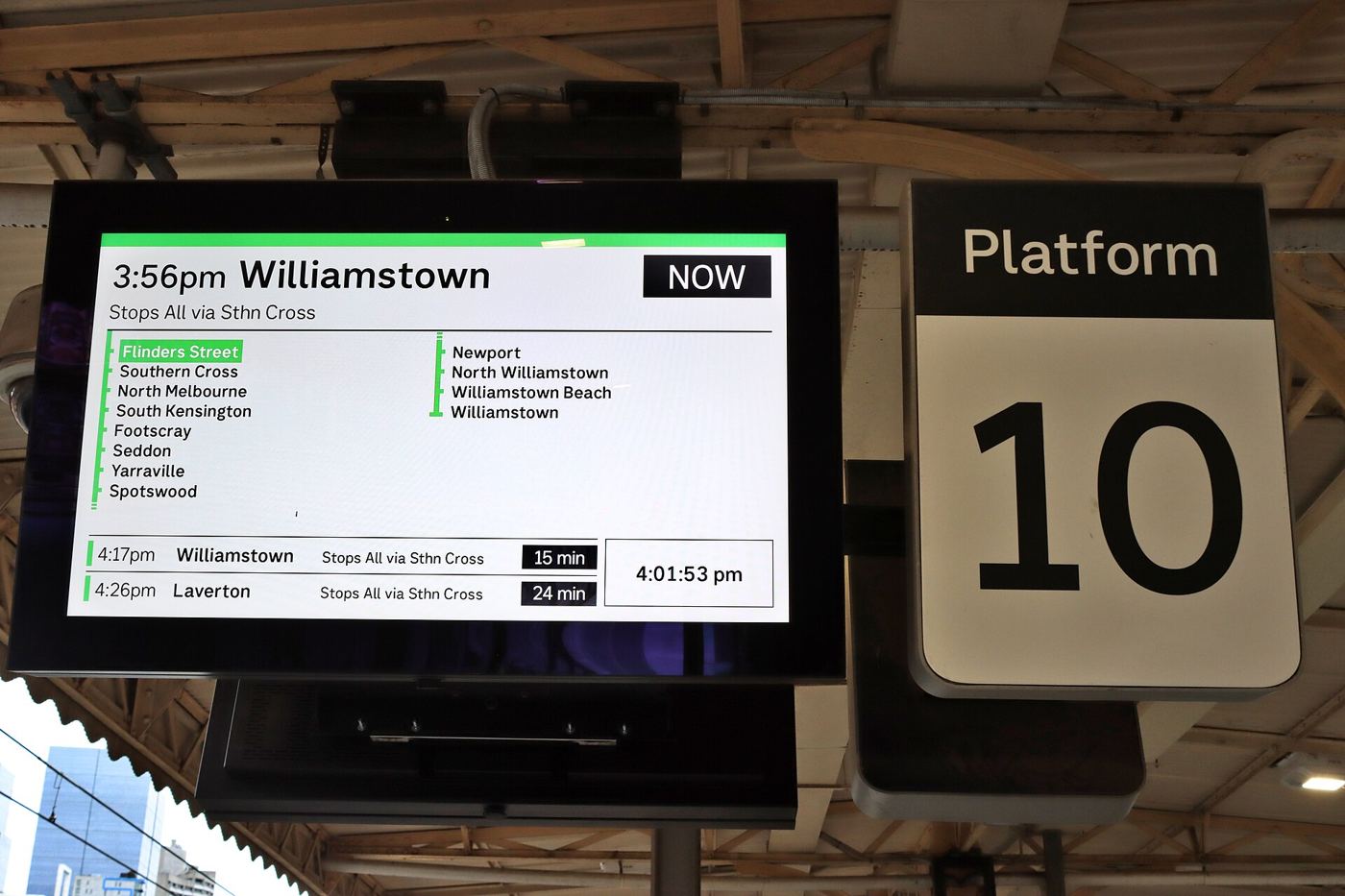
New sleeper routes, faster intercity services and simpler ticketing are persuading travellers to choose trains for journeys they once flew without thinking. It is a development that has been building quietly for months, and this week it moved firmly into the mainstream conversation. Specialists in the shift from short flights to rail say the latest developments deserve attention precisely because they are measurable: the claims can be checked, the numbers are published, and the people responsible can be asked what happens next.
Why this is happening now
Reporting from several regions points in the same direction. Officials responsible for delivery describe a programme that began as a pilot and has since been written into budgets and planning documents. Civil society groups, meanwhile, have pressed for transparency, publishing their own data and holding public meetings where residents can question the people in charge. That scrutiny has improved the quality of official statistics, and independent analysts now broadly agree on the scale of what is happening, even where they differ on causes. Reporting by BBC News has tracked the same trend from a different angle, and its conclusions align closely with what local observers describe.
Small organisations are adapting faster than large ones in several of the case studies published this month. On this site, continuing coverage in our News section has followed the shift from short flights to rail as it moved from specialist debate to a topic readers ask about directly, in comments, at events and in the questions they send the newsroom.
The questions that remain
For the public, the immediate effects are practical ones: new timetables, new forms to fill in, new prices at the till and new arguments at kitchen tables. Local representatives say their inboxes reflect that mix of hope and irritation, and most expect the politics to settle once services either visibly improve or visibly fail to. Businesses operating across regions complain about patchwork implementation, and trade bodies have asked for a single, stable set of rules rather than announcements that change with each news cycle. Rail operators involved in the work emphasise that timelines are realistic rather than heroic, and that the next phase depends as much on public response as on technical or financial capacity.
Sceptics make points that deserve an answer rather than dismissal. Some note that early data can flatter new approaches, that funding shapes which questions get studied, and that media coverage — including coverage of this story — tends to amplify the novel over the representative. Those cautions are well founded, and the most credible voices in the field are usually the first to voice them. The balance of evidence, though, has moved: what was a plausible hypothesis a few years ago is now supported by multiple independent lines of work, and the burden of proof is shifting accordingly. The pattern is visible in large cities and smaller towns alike, though the pace differs sharply from place to place.
For now, the direction of travel is clear even if the destination is not. The coming months will show whether early promise turns into lasting change, and this newsroom will keep tracking the data as it arrives.

Indoor Market Halls Win Back Weekend Food Shoppers

Adults’ Digital-Skills Classes Fill Up at Local Training Centres

Voice Assistants Learn to Handle Follow-Up Questions in One Conversation

Browsers Turn Their Privacy Spotlight on Extensions

Apartment Blocks Get Shared Heating Upgrades in Phases

Iron Batteries Offer Cheap Storage for the Power Grid

Outdoor Time Slows Childhood Myopia Progression

14 ExtraTorrent Proxy | Unblock All Extratorrents Sites

Facebook VIP Cover Photos

Jay Bhim Bio For Instagram

क्षत्रिय Bio For Instagram in Hindi

How to Fix a Redgifs Not Loading Issue: A Step-by-Step Guide

Instagram Bio Marathi

Socialmediagirls Forums: A Great Way to Find New Friends

 Tech2 years ago
14 ExtraTorrent Proxy | Unblock All Extratorrents Sites
- Facebook Bio2 years ago
Facebook VIP Cover Photos
- Instagram Bio2 years ago
Jay Bhim Bio For Instagram
- Instagram Bio2 years ago
क्षत्रिय Bio For Instagram in Hindi
- LATEST NEWS2 years ago
How to Fix a Redgifs Not Loading Issue: A Step-by-Step Guide
- Instagram Bio2 years ago
Instagram Bio Marathi
- Tech2 years ago
Socialmediagirls Forums: A Great Way to Find New Friends
- Instagram Bio2 years ago
Islamic Bio For Instagram