Business
Supreme Court Weighs the Fate of Trump’s Tariffs
The fate of President Donald Trump’s sweeping tariffs reached the US Supreme Court on 5 November 2025, in one of the most consequential economic.


The fate of President Donald Trump’s sweeping tariffs reached the US Supreme Court on 5 November 2025, in one of the most consequential economic cases in years. The justices heard more than two and a half hours of argument, against 80 minutes scheduled, in two consolidated cases, Learning Resources v. Trump and Trump v. V.O.S. Selections, brought by small businesses and a coalition of states. At issue is whether the International Emergency Economic Powers Act of 1977, a law that says nothing about tariffs, authorises the president to impose them, and whether Congress could lawfully hand that power over. Three lower courts had already ruled that the law does not authorise the tariffs. The tariffs in question include the fentanyl-related duties on China, Canada and Mexico and the worldwide reciprocal tariffs announced in April 2025, which the administration imposed by declaring national emergencies over drug trafficking and persistent trade deficits. Justices from both wings of the court sounded sceptical of the government’s case, pressing the solicitor general to point to any other place in the law where ‘regulate importation’ had ever been read as a power to tax.
What the Evidence Shows
The stakes are enormous. American businesses have already paid billions of dollars under the tariffs, and a ruling against the government would raise the question of whether that money must be refunded, a problem Justice Amy Coney Barrett pressed the challengers on directly. Businesses are already adapting, with some importers stockpiling goods, others shifting suppliers, and many passing the extra cost to customers through higher prices. A decision is expected quickly, possibly before the end of 2025, because both sides sought expedited treatment. If the tariffs fall, the administration would need Congress to impose them instead, which would be a very different political exercise. If they survive, the ruling would confirm a sweeping presidential power over trade. Either way, the case will shape how America taxes imports, and how much power future presidents have to do it alone. Reporting and analysis from sources such as Financial Times track the same developments, and specialists following Supreme Court tariff case say the direction is now consistent across independent lines of evidence.
The Wider Context
The wider context is a financial system repricing risk after a long era of cheap money. Decisions shaped by Supreme Court tariff case are being made under closer supervisory attention, with stress tests and disclosure rules that assume conditions can worsen quickly. Institutions that planned for the benign case are adjusting in public, which is uncomfortable and healthy in equal measure.
What Happens Next
What happens next with Supreme Court tariff case will be visible first in the data that professionals watch weekly: flows, spreads and the terms on new deals. Participants who spoke for this article expect a period of adjustment rather than drama, with the biggest effects landing on those who assumed the old conditions were permanent. Planning, as ever, is the cheapest hedge. You can follow related developments in our coverage of finance.
None of this will be settled by a single announcement, study or product launch. The pattern to watch is accumulation: independent confirmations, honest reporting of failures and steady improvement in the underlying numbers. Readers who follow those signals, rather than the loudest claim of the week, will understand this subject better than most of the commentary surrounding it suggests is possible.
Business
US Economy Grows 3.4 Percent as Consumers Keep Spending
The United States economy grew at an annual rate of 3.

The United States economy grew at an annual rate of 3.4 percent in the third quarter of 2026, according to the advance estimate published by the Bureau of Economic Analysis on October 29. The pace was faster than the 2.2 percent recorded in the second quarter, faster than the quickest growth since the third quarter of 2025, and above economists’ forecast of 3.2 percent. Consumer spending, which accounts for more than two-thirds of the economy, rose at a brisk 3.8 percent, while business investment jumped 12.7 percent, with spending on equipment up 20.9 percent as companies poured money into artificial intelligence. Inventories added 1.6 percentage points to growth, and exports fell. Inflation cooled at the same time: the personal consumption expenditures price index rose 2.1 percent, down sharply from 5.0 percent in the second quarter. The next estimate is due on November 25.
What the Evidence Shows
The strong numbers sit oddly beside the mood on Wall Street, where stocks fell for six straight sessions in November as investors braced for another Federal Reserve rate rise in December. Growth was broad: real final sales to private domestic purchasers, a measure of underlying demand, rose 4.9 percent, up from 4.6 percent in the second quarter. Services spending rose 4.1 percent, led by food services and accommodation, up 9 percent, and health care, up 4.9 percent. Not everything was strong: residential investment fell 3.3 percent as high mortgage rates and demographic shifts weighed on housing, and federal spending added nearly one percentage point to growth. Forecasters at PNC expect growth of only around 2.0 percent through the second half of 2027, as consumer spending and business investment slow. For now, though, the American consumer keeps spending despite worries about prices. Reporting and analysis from sources such as World Bank track the same developments, and specialists following US economic growth in the third quarter say the direction is now consistent across independent lines of evidence.
The Wider Context
For households and small firms, US economic growth in the third quarter matters through prices and access rather than through market commentary. Changes at this level arrive as a rate on an offer letter, a fee on a statement or a product that quietly disappears from a comparison table. Consumer groups argue that transparency at exactly that point of decision is worth more than any amount of market-level reporting.
What Happens Next
The outlook for US economic growth in the third quarter hinges on policy choices that will be made in the open over the coming quarters. Market participants are positioned for more than one outcome, which is why the immediate reaction to each announcement has been smaller than the commentary around it. For ordinary savers and borrowers, the advice from every quarter is the same: review your own position, not the headlines. You can follow related developments in our coverage of finance.
It is also worth remembering how quickly the picture in this area has changed before. Positions that looked settled a few years ago have been revised as new data arrived, and the same humility is appropriate now. The strongest coverage of this subject, and the most useful advice, tends to come from sources that update their views openly when the facts move, rather than defending an earlier position long after it has stopped fitting the evidence available.
Business
Japan Approves $135 Billion Stimulus in Takaichi’s First Big Economic Move
Japan’s cabinet has approved a 21.

Japan’s cabinet has approved a 21.3-trillion-yen stimulus package, worth about 135 billion dollars, the largest since the Covid pandemic. The package was approved on 21 November 2026, the first major economic initiative under Prime Minister Sanae Takaichi, who took office last month and champions what she calls responsible and proactive fiscal policy. General account spending of 17.7 trillion yen is nearly 4 trillion yen more than last year’s package of 13.9 trillion yen. The package also includes 2.7 trillion yen of tax cuts, from scrapping the gasoline tax surcharge and raising the income tax threshold. Spending is split between 8.9 trillion yen for livelihoods and high prices, 6.4 trillion yen for crisis management and economic growth, and 1.7 trillion yen for defence and diplomacy. Families will receive 20,000 yen per child, and energy bills will be subsidised by about 7,000 yen per average household over the first three months of next year.
What the Evidence Shows
The government plans to submit a supplementary budget to fund the package, aiming for parliamentary approval by the end of the year, with subsidies and grants starting in January. About 11.7 trillion yen of the spending will be funded by new government bonds, roughly 64 percent of the supplementary budget, with the rest covered by higher-than-expected tax revenue and surpluses. Financial markets have reacted warily since Takaichi took office, with the yen weakening and bond yields rising, and the reaction intensified after the package was announced. Japan already carries one of the heaviest public debt loads in the developed world, and economists warn the stimulus pushes the goal of a primary budget surplus further out of reach. The government expects the package to lift GDP by 24 trillion yen, an annualised rate of 1.4 percent. Reporting and analysis from sources such as Financial Times track the same developments, and specialists following Japan’s ¥21.3 trillion stimulus package say the direction is now consistent across independent lines of evidence.
The Wider Context
The wider context is a financial system repricing risk after a long era of cheap money. Decisions shaped by Japan’s ¥21.3 trillion stimulus package are being made under closer supervisory attention, with stress tests and disclosure rules that assume conditions can worsen quickly. Institutions that planned for the benign case are adjusting in public, which is uncomfortable and healthy in equal measure.
What Happens Next
What happens next with Japan’s ¥21.3 trillion stimulus package will be visible first in the data that professionals watch weekly: flows, spreads and the terms on new deals. Participants who spoke for this article expect a period of adjustment rather than drama, with the biggest effects landing on those who assumed the old conditions were permanent. Planning, as ever, is the cheapest hedge. You can follow related developments in our coverage of finance.
None of this will be settled by a single announcement, study or product launch. The pattern to watch is accumulation: independent confirmations, honest reporting of failures and steady improvement in the underlying numbers. Readers who follow those signals, rather than the loudest claim of the week, will understand this subject better than most of the commentary surrounding it suggests is possible.
Business
London’s FTSE 100 Hits Record Highs as Banks Rally
London’s stock market ended 2025 with a flourish that few predicted at the start of the year.
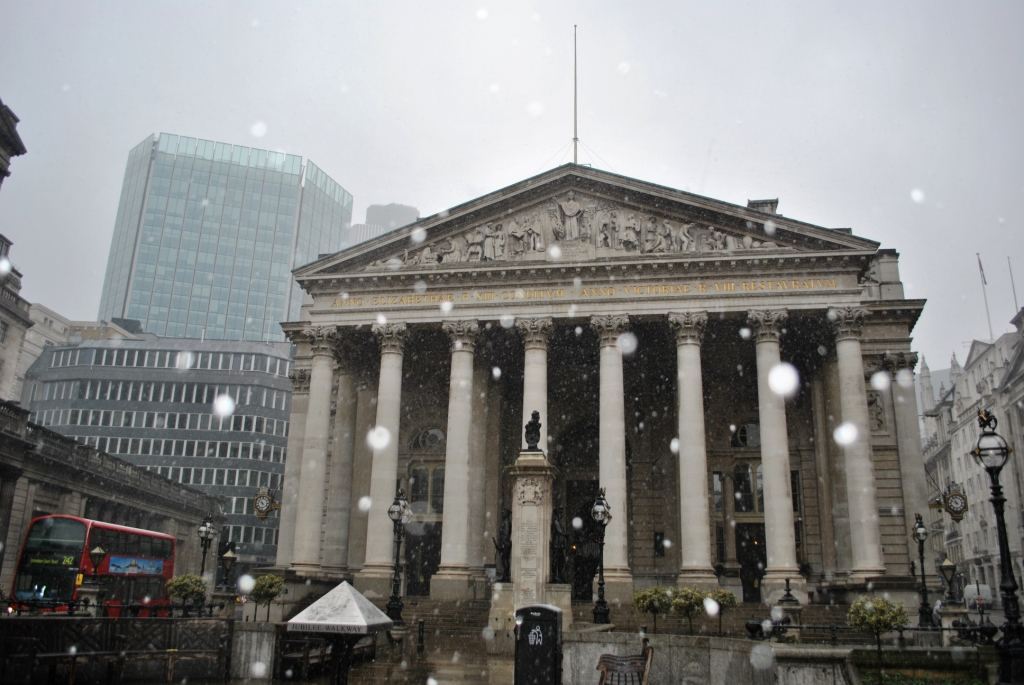
London’s stock market ended 2025 with a flourish that few predicted at the start of the year. On the penultimate trading day of the year, the FTSE 100 closed 0.8 percent higher at 9,940.7 points, a record high and its best performance in nearly seven weeks, leaving the index up about 21 percent for the year, its strongest annual showing since 2009. Banks did much of the heavy lifting: Standard Chartered rose about 85 percent over the year, Lloyds gained around 80 percent, Barclays about 79 percent, NatWest 63 percent and HSBC 51 percent, helped by interest rates staying higher for longer, which widened their lending margins. Miners joined the rally as gold and silver hit record prices, with Fresnillo, the precious metals miner, among the year’s biggest gainers. At one point the index even flirted with the 10,000-point barrier, a level that would have seemed fanciful when London’s market was written off as a backwater only a few years ago.
What the Evidence Shows
The rally was driven less by Britain’s economy, which grew only slowly, than by a rotation of global money. Investors hunting for value noticed that FTSE 100 companies traded at roughly ten times earnings, against about twenty-two times for America’s S&P 500, while paying generous dividends and buying back their own shares. Higher commodity prices lifted miners and energy companies, and relief that the autumn budget brought no windfall tax on banks gave financial stocks a further push. Defence and engineering shares also surged as European governments raised military spending. The index also benefited from a weaker pound, which flatters the overseas earnings of its multinational members. The risks have not gone away: the Bank of England is expected to cut rates, which would squeeze bank margins, and laggards such as WPP and Diageo show that not every British company shared in the boom. Even so, 2025 ended a long period in which London was the market investors loved to ignore. Reporting and analysis from sources such as World Bank track the same developments, and specialists following FTSE 100 record high say the direction is now consistent across independent lines of evidence.
The Wider Context
For households and small firms, FTSE 100 record high matters through prices and access rather than through market commentary. Changes at this level arrive as a rate on an offer letter, a fee on a statement or a product that quietly disappears from a comparison table. Consumer groups argue that transparency at exactly that point of decision is worth more than any amount of market-level reporting.
What Happens Next
The outlook for FTSE 100 record high hinges on policy choices that will be made in the open over the coming quarters. Market participants are positioned for more than one outcome, which is why the immediate reaction to each announcement has been smaller than the commentary around it. For ordinary savers and borrowers, the advice from every quarter is the same: review your own position, not the headlines. You can follow related developments in our coverage of finance.
It is also worth remembering how quickly the picture in this area has changed before. Positions that looked settled a few years ago have been revised as new data arrived, and the same humility is appropriate now. The strongest coverage of this subject, and the most useful advice, tends to come from sources that update their views openly when the facts move, rather than defending an earlier position long after it has stopped fitting the evidence available.

US Economy Grows 3.4 Percent as Consumers Keep Spending

Japan Approves $135 Billion Stimulus in Takaichi’s First Big Economic Move

Supreme Court Weighs the Fate of Trump’s Tariffs

London’s FTSE 100 Hits Record Highs as Banks Rally

Government Bond Yields Climb as Inflation Worries Return

Why Your Morning Coffee Keeps Getting More Expensive

Travellers Hunt Better Exchange Rates Before Winter Trips

14 ExtraTorrent Proxy | Unblock All Extratorrents Sites

Facebook VIP Cover Photos

Jay Bhim Bio For Instagram

क्षत्रिय Bio For Instagram in Hindi

How to Fix a Redgifs Not Loading Issue: A Step-by-Step Guide

Instagram Bio Marathi

Islamic Bio For Instagram

 Tech3 years ago
14 ExtraTorrent Proxy | Unblock All Extratorrents Sites
- Facebook Bio2 years ago
Facebook VIP Cover Photos
- Instagram Bio2 years ago
Jay Bhim Bio For Instagram
- Instagram Bio2 years ago
क्षत्रिय Bio For Instagram in Hindi
- LATEST NEWS2 years ago
How to Fix a Redgifs Not Loading Issue: A Step-by-Step Guide
- Instagram Bio2 years ago
Instagram Bio Marathi
- Instagram Bio2 years ago
Islamic Bio For Instagram
- Tech2 years ago
Socialmediagirls Forums: A Great Way to Find New Friends