Business
Lula Names Bradesco Chair Trabuco as Brazil’s New Finance Minister
Brazil’s President Lula named Bradesco chair Trabuco as the country’s new finance minister on Thursday, November 26, and the market greeted the.


Brazil’s President Lula named Bradesco chair Trabuco as the country’s new finance minister on Thursday, November 26, and the market greeted the news favourably, TalkMarkets reported. The Brazilian real strengthened for a fourth consecutive session, with the dollar falling to about 5.66 reais. Trabuco moves from leading one of Brazil’s largest private banks into the top economic job in government, a switch that investors read as a signal of market-friendly economic management. The appointment comes as Brazil’s government faces pressure over spending, growth and the currency, and as investors watch closely for any shift in economic policy. The real had already been under strain this year, so a trusted name from the banking world was seen as a calming choice.
What the Evidence Shows
Finance minister appointments matter in Brazil because the role sets the tone for budgets, debt and relations with Congress and the central bank. Markets have punished ministers seen as willing to loosen spending, and rewarded those who signal discipline. Trabuco’s banking background gives him credibility with investors, but he will have to manage the same political pressures as his predecessors, including demands for higher public spending. The real’s four-day rally suggests traders are giving him the benefit of the doubt for now, with initial support for the currency seen near 5.60 reais to the dollar. Reporting and analysis from sources such as World Bank track the same developments, and specialists following Brazil’s new finance minister say the direction is now consistent across independent lines of evidence.
The Wider Context
For households and small firms, Brazil’s new finance minister matters through prices and access rather than through market commentary. Changes at this level arrive as a rate on an offer letter, a fee on a statement or a product that quietly disappears from a comparison table. Consumer groups argue that transparency at exactly that point of decision is worth more than any amount of market-level reporting.
What Happens Next
The outlook for Brazil’s new finance minister hinges on policy choices that will be made in the open over the coming quarters. Market participants are positioned for more than one outcome, which is why the immediate reaction to each announcement has been smaller than the commentary around it. For ordinary savers and borrowers, the advice from every quarter is the same: review your own position, not the headlines. You can follow related developments in our coverage of finance.
It is also worth remembering how quickly the picture in this area has changed before. Positions that looked settled a few years ago have been revised as new data arrived, and the same humility is appropriate now. The strongest coverage of this subject, and the most useful advice, tends to come from sources that update their views openly when the facts move, rather than defending an earlier position long after it has stopped fitting the evidence available.
Business
India’s Growth Seen at 7.5% in September Quarter as Farm Output Nearly Stalls
India’s economy likely grew 7.

India’s economy likely grew 7.5 percent year on year in the July to September 2026 quarter, a marginal slowdown from 7.8 percent in the preceding quarter, according to rating agency ICRA’s estimates released on 17 November. The figure remains above the Reserve Bank of India’s forecast of 7.2 percent for the period, keeping India among the world’s fastest-growing large economies. ICRA trimmed its full-year growth projection for the 2026-27 fiscal year to 7.1 percent, citing deficient rainfall, rising inflation and elevated input costs weighing on rural demand. SBI Research had estimated slightly stronger growth of 7.8 percent for the quarter, based on a model tracking 54 high-frequency indicators across agriculture, industry and services.
What the Evidence Shows
The headline number masks a sharp divide between sectors. Growth in gross value added is estimated to have eased to 7.2 percent from 8.2 percent, with services slowing to 9.1 percent from 10.0 percent and industry to 7.2 percent from 7.7 percent. Agriculture nearly stalled, with farm output growth estimated at just 0.2 percent against 3.6 percent in the previous quarter and 3.2 percent a year earlier, after a weak monsoon and lower sowing of summer crops. SBI Research had estimated slightly stronger growth of 7.8 percent for the same quarter. ICRA’s chief economist Aditi Nayar said robust high-frequency data across industry and services pointed to healthy growth in those segments despite sustained external headwinds. Reporting and analysis from sources such as Financial Times track the same developments, and specialists following India’s GDP growth say the direction is now consistent across independent lines of evidence.
The Wider Context
The wider context is a financial system repricing risk after a long era of cheap money. Decisions shaped by India’s GDP growth are being made under closer supervisory attention, with stress tests and disclosure rules that assume conditions can worsen quickly. Institutions that planned for the benign case are adjusting in public, which is uncomfortable and healthy in equal measure.
What Happens Next
What happens next with India’s GDP growth will be visible first in the data that professionals watch weekly: flows, spreads and the terms on new deals. Participants who spoke for this article expect a period of adjustment rather than drama, with the biggest effects landing on those who assumed the old conditions were permanent. Planning, as ever, is the cheapest hedge. You can follow related developments in our coverage of finance.
None of this will be settled by a single announcement, study or product launch. The pattern to watch is accumulation: independent confirmations, honest reporting of failures and steady improvement in the underlying numbers. Readers who follow those signals, rather than the loudest claim of the week, will understand this subject better than most of the commentary surrounding it suggests is possible.
Business
Norse Atlantic Suspends All Flights and Warns of Bankruptcy
Norse Atlantic Airways suspended all flights on Thursday, 26 November 2026, and warned it would file for bankruptcy unless it urgently secures.

Norse Atlantic Airways suspended all flights on Thursday, 26 November 2026, and warned it would file for bankruptcy unless it urgently secures financing, stranding hundreds of Thanksgiving holiday travellers in the United States, the United Kingdom and elsewhere. The Norwegian long-haul budget carrier said its financial situation was critical, a day after warning it needed financing to meet its immediate liquidity needs. Its shares had already fallen 85 percent, and the airline returned all its aircraft to bases in Norway, Sweden and Britain while it holds last-ditch talks with investors about a takeover. Reuters reported the suspension on Thursday, calling Norse the latest casualty of turmoil in the airline sector.
What the Evidence Shows
The airline’s fuel bill surged because of the Iran war, and Norse had not hedged its fuel needs, leaving it exposed as prices rose and forcing it to operate at reduced capacity. The suspension also hit Pakistan International Airlines, which had wet-leased two Boeing 787-9 jets from Norse and had to cancel two flights from London and Manchester before switching its British operations to its own Boeing 777 fleet. Norse, which began flying in June 2022, also held a meeting on 25 November with holders of its 52 million dollar senior secured bonds, which carry a 15 percent coupon. The company says there is no assurance a viable solution will be found. Reporting and analysis from sources such as World Bank track the same developments, and specialists following the Norse Atlantic flight suspension say the direction is now consistent across independent lines of evidence.
The Wider Context
For households and small firms, the Norse Atlantic flight suspension matters through prices and access rather than through market commentary. Changes at this level arrive as a rate on an offer letter, a fee on a statement or a product that quietly disappears from a comparison table. Consumer groups argue that transparency at exactly that point of decision is worth more than any amount of market-level reporting.
What Happens Next
The outlook for the Norse Atlantic flight suspension hinges on policy choices that will be made in the open over the coming quarters. Market participants are positioned for more than one outcome, which is why the immediate reaction to each announcement has been smaller than the commentary around it. For ordinary savers and borrowers, the advice from every quarter is the same: review your own position, not the headlines. You can follow related developments in our coverage of finance.
It is also worth remembering how quickly the picture in this area has changed before. Positions that looked settled a few years ago have been revised as new data arrived, and the same humility is appropriate now. The strongest coverage of this subject, and the most useful advice, tends to come from sources that update their views openly when the facts move, rather than defending an earlier position long after it has stopped fitting the evidence available.
Business
Deere Profit Falls as Large Farm Equipment Sales Slide 15%
Deere reported lower fourth-quarter profit on Wednesday, November 25, 2026, as weaker sales of large farm equipment outweighed growth in.
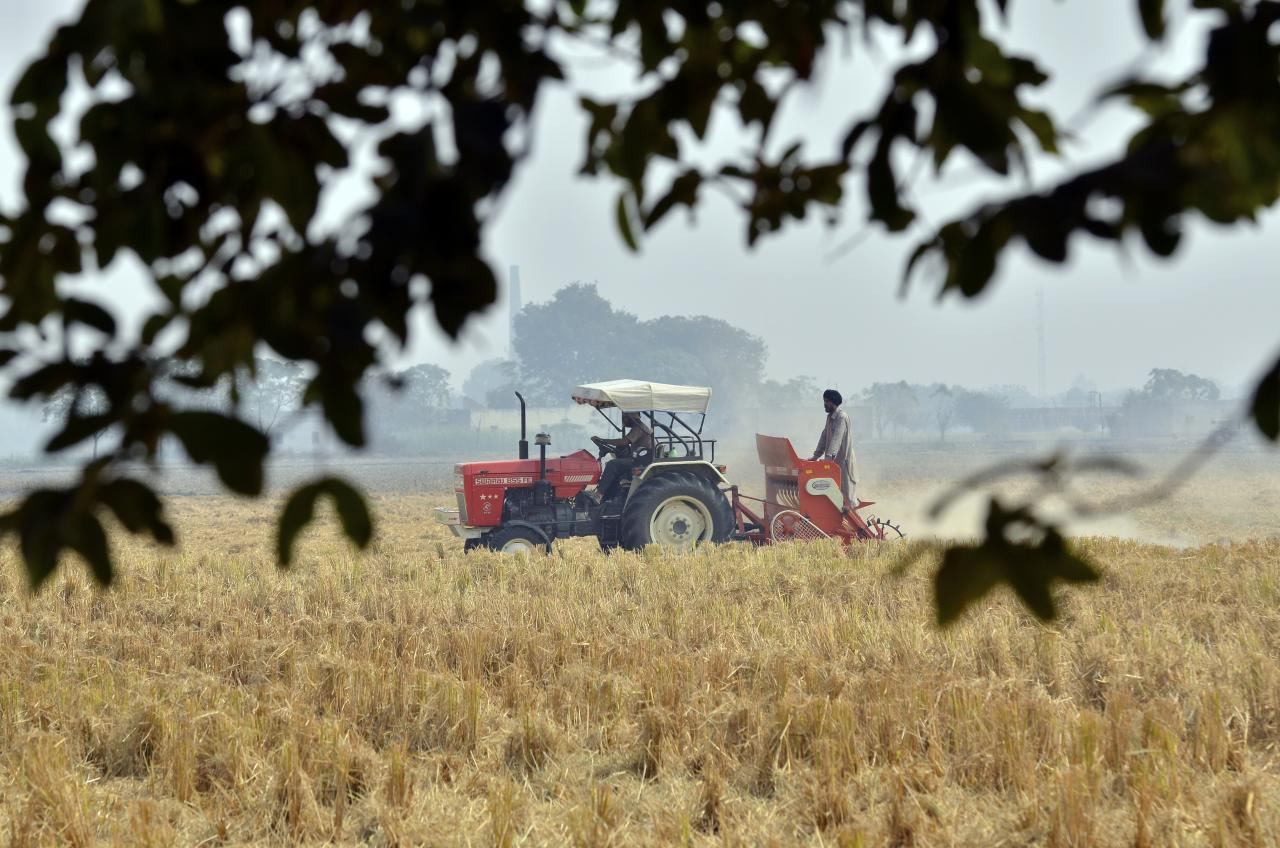
Deere reported lower fourth-quarter profit on Wednesday, November 25, 2026, as weaker sales of large farm equipment outweighed growth in construction machinery and smaller agricultural products. Net income fell to $1.051 billion, or $3.89 a share, from $1.065 billion, or $3.93 a share, a year earlier, missing the $4.06 consensus estimate by 17 cents. Worldwide net sales and revenues declined about 2 percent to $12.12 billion, though that beat estimates. Shares slipped 2.2 percent in premarket trading, despite having risen 31 percent this year against a 5 percent gain for the S and P 500. For fiscal year 2026, net income attributable to Deere was $4.860 billion, or $17.95 per share, compared with $5.027 billion, or $18.50 per share, in fiscal 2025.
What the Evidence Shows
Sales in production and precision agriculture, the company’s largest division, slid 15 percent to $4.02 billion as shipment volumes declined, and operating profit there fell 33 percent to $406 million. Construction and forestry sales rose 12 percent to $3.79 billion, partly supported by data-centre investment, but operating profit still slipped 3 percent to $339 million as higher costs and spending offset the gains. Deere forecast fiscal 2027 net income of $4.50 billion to $5.25 billion, below Wall Street estimates, including a one-time non-cash pension settlement charge of $250 million to $400 million. The company also sees early improvement in large agriculture, led by North America. Deere sees early improvement in large agriculture, led by North America, and forecasts production and precision agriculture sales to rise 5 percent to 15 percent in fiscal 2027. Reporting and analysis from sources such as World Bank track the same developments, and specialists following the Deere quarterly profit fall say the direction is now consistent across independent lines of evidence.
The Wider Context
For households and small firms, the Deere quarterly profit fall matters through prices and access rather than through market commentary. Changes at this level arrive as a rate on an offer letter, a fee on a statement or a product that quietly disappears from a comparison table. Consumer groups argue that transparency at exactly that point of decision is worth more than any amount of market-level reporting.
What Happens Next
The outlook for the Deere quarterly profit fall hinges on policy choices that will be made in the open over the coming quarters. Market participants are positioned for more than one outcome, which is why the immediate reaction to each announcement has been smaller than the commentary around it. For ordinary savers and borrowers, the advice from every quarter is the same: review your own position, not the headlines. You can follow related developments in our coverage of finance.
It is also worth remembering how quickly the picture in this area has changed before. Positions that looked settled a few years ago have been revised as new data arrived, and the same humility is appropriate now. The strongest coverage of this subject, and the most useful advice, tends to come from sources that update their views openly when the facts move, rather than defending an earlier position long after it has stopped fitting the evidence available.

India’s Growth Seen at 7.5% in September Quarter as Farm Output Nearly Stalls

Lula Names Bradesco Chair Trabuco as Brazil’s New Finance Minister

Norse Atlantic Suspends All Flights and Warns of Bankruptcy

Deere Profit Falls as Large Farm Equipment Sales Slide 15%

Walmart Raises Outlook After $188.8 Billion Quarter

Dollar Hits 19-Month High as Traders Bet on More Fed Hikes

Nasdaq Futures Jump 3% as Wall Street Attempts a Rebound After Rout

14 ExtraTorrent Proxy | Unblock All Extratorrents Sites

Facebook VIP Cover Photos

Jay Bhim Bio For Instagram

क्षत्रिय Bio For Instagram in Hindi

How to Fix a Redgifs Not Loading Issue: A Step-by-Step Guide

Instagram Bio Marathi

Islamic Bio For Instagram

 Tech3 years ago
14 ExtraTorrent Proxy | Unblock All Extratorrents Sites
- Facebook Bio2 years ago
Facebook VIP Cover Photos
- Instagram Bio2 years ago
Jay Bhim Bio For Instagram
- Instagram Bio2 years ago
क्षत्रिय Bio For Instagram in Hindi
- LATEST NEWS2 years ago
How to Fix a Redgifs Not Loading Issue: A Step-by-Step Guide
- Instagram Bio2 years ago
Instagram Bio Marathi
- Instagram Bio2 years ago
Islamic Bio For Instagram
- Tech2 years ago
Socialmediagirls Forums: A Great Way to Find New Friends