Business
Eurozone Inflation Hits a Three-Year High in October
Inflation across the eurozone has climbed to its highest level in three years, complicating the European Central Bank’s task just as growth begins.


Inflation across the eurozone has climbed to its highest level in three years, complicating the European Central Bank’s task just as growth begins to falter. Headline inflation reached 4.0 percent in October, up from 3.8 percent the month before, driven in large part by rising energy costs. The reading is the worst since the inflation surge of the early 2020s, and it arrives as business activity loses momentum: the composite purchasing managers’ index slipped from 53.1 to 51.7, pointing to a noticeable slowdown. The European Central Bank is now expected to follow its peers with further rate rises, even though higher borrowing costs will squeeze households and firms that are already under strain. Services inflation has also stayed stubbornly high, as wage rises feed through into the cost of restaurants, travel and other everyday services.
What the Evidence Shows
For households across the currency bloc, the figures mean another squeeze on living standards, with food, fuel and services all costing more than a year ago. Energy is the main culprit, but price rises have spread into services and wages, which makes inflation harder to shift. Governments face pressure to help with bills, yet extra spending risks fuelling the very inflation central banks are fighting. For travellers and businesses trading with Europe, a weaker euro and dearer credit change the cost of holidays and imports. The next few months will show whether the ECB’s medicine works, or whether Europe faces a longer period of high prices and low growth. The slowdown in business activity complicates the response, because raising rates further could deepen the downturn, yet doing nothing risks letting inflation become entrenched. Reporting and analysis from sources such as Financial Times track the same developments, and specialists following eurozone inflation at a three-year high say the direction is now consistent across independent lines of evidence.
The Wider Context
The wider context is a financial system repricing risk after a long era of cheap money. Decisions shaped by eurozone inflation at a three-year high are being made under closer supervisory attention, with stress tests and disclosure rules that assume conditions can worsen quickly. Institutions that planned for the benign case are adjusting in public, which is uncomfortable and healthy in equal measure.
What Happens Next
What happens next with eurozone inflation at a three-year high will be visible first in the data that professionals watch weekly: flows, spreads and the terms on new deals. Participants who spoke for this article expect a period of adjustment rather than drama, with the biggest effects landing on those who assumed the old conditions were permanent. Planning, as ever, is the cheapest hedge. You can follow related developments in our coverage of finance.
None of this will be settled by a single announcement, study or product launch. The pattern to watch is accumulation: independent confirmations, honest reporting of failures and steady improvement in the underlying numbers. Readers who follow those signals, rather than the loudest claim of the week, will understand this subject better than most of the commentary surrounding it suggests is possible.
Business
Ten-Year Treasury Yield Tops 5% as Rate Fears Grow
The yield on the 10-year US Treasury note has climbed back above 5 percent, a level that is reshaping prices across global markets.
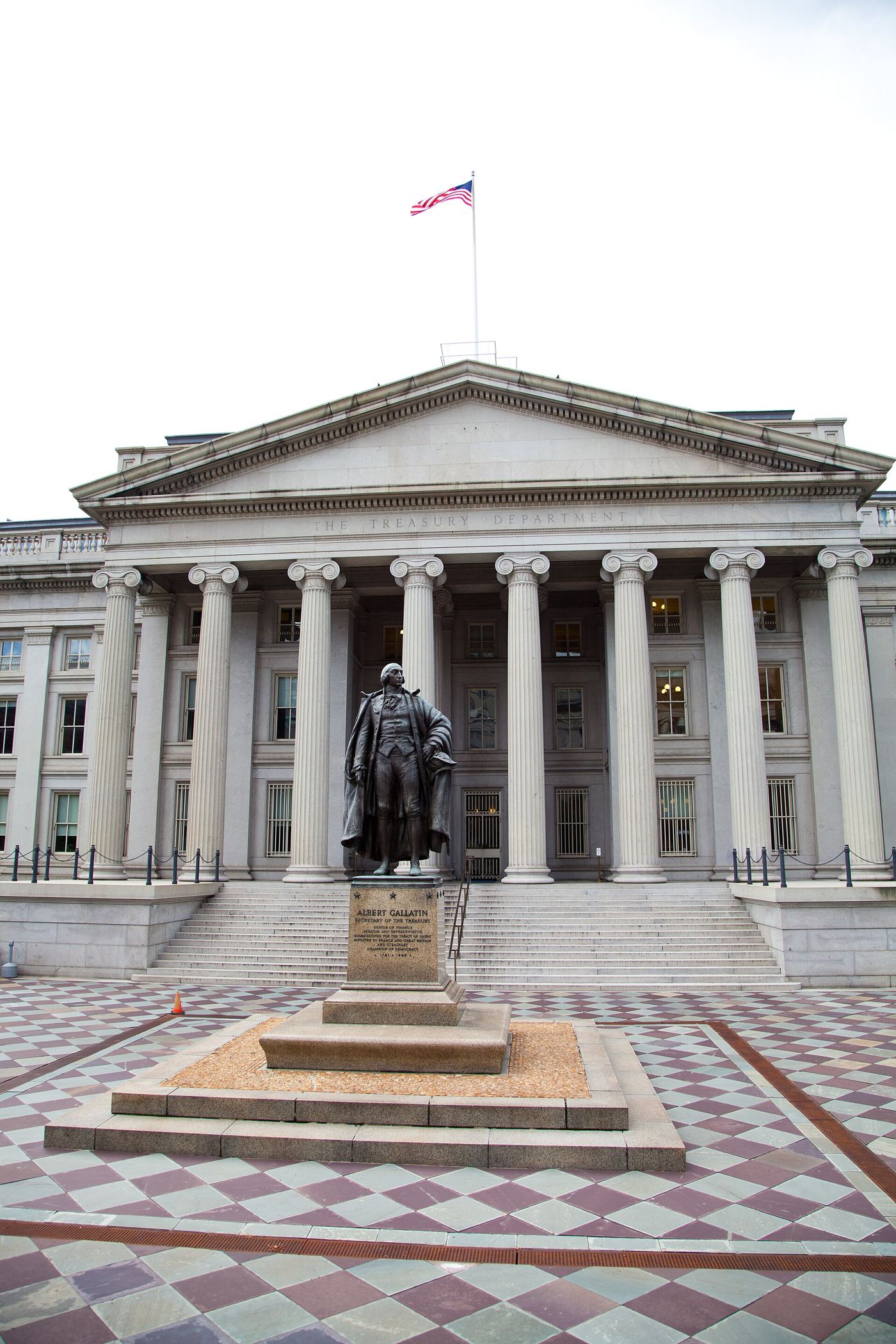
The yield on the 10-year US Treasury note has climbed back above 5 percent, a level that is reshaping prices across global markets. The rise follows stronger-than-expected US jobs and inflation data, which pushed traders to price in a December Federal Reserve rate increase with odds of around 92 percent. Higher long-term yields raise borrowing costs for governments, companies and households, and they make safe assets more attractive compared with shares and crypto. The Nasdaq fell 2.5 percent on Monday as technology stocks, which are most sensitive to higher rates, led the selloff. The yield has risen about 20 basis points in a week, a rapid move that has caught many investors by surprise and forced a rethink of portfolios built for lower rates.
What the Evidence Shows
The 10-year yield is the benchmark for much of the world’s borrowing, from US mortgages to corporate bonds, so a move above 5 percent carries real consequences. Companies face dearer debt when they refinance, governments pay more to fund deficits, and investors demand higher returns to hold riskier assets. Some analysts argue the rise reflects genuine concern about inflation, while others see it as a repricing of how long rates will stay high. Either way, the market’s message is clear: money is no longer cheap, and asset prices must adjust to that reality. Mortgage rates in the United States track the 10-year yield closely, so homebuyers are already feeling the impact in higher monthly payments. Refinancing activity has slowed sharply as a result, and housing market activity is cooling. Reporting and analysis from sources such as World Bank track the same developments, and specialists following the ten-year Treasury yield above 5% say the direction is now consistent across independent lines of evidence.
The Wider Context
For households and small firms, the ten-year Treasury yield above 5% matters through prices and access rather than through market commentary. Changes at this level arrive as a rate on an offer letter, a fee on a statement or a product that quietly disappears from a comparison table. Consumer groups argue that transparency at exactly that point of decision is worth more than any amount of market-level reporting.
What Happens Next
The outlook for the ten-year Treasury yield above 5% hinges on policy choices that will be made in the open over the coming quarters. Market participants are positioned for more than one outcome, which is why the immediate reaction to each announcement has been smaller than the commentary around it. For ordinary savers and borrowers, the advice from every quarter is the same: review your own position, not the headlines. You can follow related developments in our coverage of finance.
It is also worth remembering how quickly the picture in this area has changed before. Positions that looked settled a few years ago have been revised as new data arrived, and the same humility is appropriate now. The strongest coverage of this subject, and the most useful advice, tends to come from sources that update their views openly when the facts move, rather than defending an earlier position long after it has stopped fitting the evidence available.
Business
Young Drivers Cut Car Insurance Costs With Telematics
Young drivers pay the highest car insurance premiums of any age group, often thousands of pounds a year, because insurers see them as the riskiest.

Young drivers pay the highest car insurance premiums of any age group, often thousands of pounds a year, because insurers see them as the riskiest customers on the road. A small device or phone app known as telematics, sometimes called a black box, is changing that calculation. The device records how the car is driven, tracking speed, braking, cornering, mileage and the time of day, and sends the data to the insurer. A careful young driver who avoids late-night trips, brakes gently and keeps within speed limits can earn a discount at renewal, sometimes cutting the premium by a large amount. Insurers say the data lets them price each driver on their own behaviour rather than on the average for their age group. For many young drivers, the box is the difference between affording a car and leaving it parked, and some policies now offer a discount after just a few months of safe driving.
What the Evidence Shows
The trade-off is privacy, and not every driver is comfortable with it. The insurer knows where the car goes and when, and some drivers worry about the data being used to raise premiums after a single bad journey or being shared with other companies. Insurers insist the data is used only to set the price, and that a driver can see their own scores and learn where to improve. The devices have also been credited with making young drivers safer, since knowing that every harsh brake is recorded encourages gentler driving. Some policies add curfews, charging more for driving late at night, which critics say punishes young workers on night shifts. Supporters reply that the statistics back the curfew, since crashes are far more likely after midnight. As the technology spreads, insurers are also offering telematics to older drivers who want a discount for low mileage. Reporting and analysis from sources such as World Bank track the same developments, and specialists following young drivers cutting car insurance costs with telematics say the direction is now consistent across independent lines of evidence.
The Wider Context
For households and small firms, young drivers cutting car insurance costs with telematics matters through prices and access rather than through market commentary. Changes at this level arrive as a rate on an offer letter, a fee on a statement or a product that quietly disappears from a comparison table. Consumer groups argue that transparency at exactly that point of decision is worth more than any amount of market-level reporting.
What Happens Next
The outlook for young drivers cutting car insurance costs with telematics hinges on policy choices that will be made in the open over the coming quarters. Market participants are positioned for more than one outcome, which is why the immediate reaction to each announcement has been smaller than the commentary around it. For ordinary savers and borrowers, the advice from every quarter is the same: review your own position, not the headlines. You can follow related developments in our coverage of finance.
It is also worth remembering how quickly the picture in this area has changed before. Positions that looked settled a few years ago have been revised as new data arrived, and the same humility is appropriate now. The strongest coverage of this subject, and the most useful advice, tends to come from sources that update their views openly when the facts move, rather than defending an earlier position long after it has stopped fitting the evidence available.
Business
First-Time Buyers Save for a Deposit One Payday at a Time
First-time buyers are saving for a deposit one payday at a time, turning a goal that once felt impossible into a steady monthly habit.

First-time buyers are saving for a deposit one payday at a time, turning a goal that once felt impossible into a steady monthly habit. A deposit is the biggest barrier to buying a first home, with the average first-time buyer needing tens of thousands of pounds before a lender will even consider an application. Money advisers say the savers who succeed are rarely the ones who save the most in a single month, but the ones who save a fixed amount every payday, automatically, before the money can be spent. A separate savings account, ideally one that pays a decent rate and is hard to dip into, makes the habit stick, and government schemes such as a Lifetime ISA can add a bonus to the pot. Many savers also cut a specific cost, such as takeaways or a streaming bundle, and move that exact amount into the deposit fund. The progress feels slow at first, they say, then suddenly the balance looks like a real deposit. For first-time buyers, the habit matters more than the headline figure.
What the Evidence Shows
Experts recommend a few practical steps: set a target and a date, check how much can be borrowed at different deposit sizes, and keep an eye on schemes for first-time buyers that may change the amount needed. A regular review, even quarterly, keeps motivation up and shows whether the plan is on track. Savers are advised to keep the deposit fund separate from emergency savings, so a broken car does not raid the house fund. It is also worth checking the credit report early, since a poor score can delay a mortgage even with a deposit saved. Parents and family sometimes help, and advisers say any gift should be documented, since lenders ask where the deposit came from. For buyers who keep going, the payoff is real: a deposit saved, a mortgage offered, and the front door of a first home. Reporting and analysis from sources such as Financial Times track the same developments, and specialists following saving for a house deposit say the direction is now consistent across independent lines of evidence.
The Wider Context
The wider context is a financial system repricing risk after a long era of cheap money. Decisions shaped by saving for a house deposit are being made under closer supervisory attention, with stress tests and disclosure rules that assume conditions can worsen quickly. Institutions that planned for the benign case are adjusting in public, which is uncomfortable and healthy in equal measure.
What Happens Next
What happens next with saving for a house deposit will be visible first in the data that professionals watch weekly: flows, spreads and the terms on new deals. Participants who spoke for this article expect a period of adjustment rather than drama, with the biggest effects landing on those who assumed the old conditions were permanent. Planning, as ever, is the cheapest hedge. You can follow related developments in our coverage of finance.
None of this will be settled by a single announcement, study or product launch. The pattern to watch is accumulation: independent confirmations, honest reporting of failures and steady improvement in the underlying numbers. Readers who follow those signals, rather than the loudest claim of the week, will understand this subject better than most of the commentary surrounding it suggests is possible.

Ten-Year Treasury Yield Tops 5% as Rate Fears Grow

Eurozone Inflation Hits a Three-Year High in October

Spider Silk Is Stronger Than Steel for Its Weight

The Axolotl Can Regrow Its Heart, Brain and Limbs

Young Drivers Cut Car Insurance Costs With Telematics

First-Time Buyers Save for a Deposit One Payday at a Time

Green Bonds Fund the Energy Transition in Emerging Economies

14 ExtraTorrent Proxy | Unblock All Extratorrents Sites

Facebook VIP Cover Photos

Jay Bhim Bio For Instagram

क्षत्रिय Bio For Instagram in Hindi

How to Fix a Redgifs Not Loading Issue: A Step-by-Step Guide

Instagram Bio Marathi

Islamic Bio For Instagram

 Tech2 years ago
14 ExtraTorrent Proxy | Unblock All Extratorrents Sites
- Facebook Bio2 years ago
Facebook VIP Cover Photos
- Instagram Bio2 years ago
Jay Bhim Bio For Instagram
- Instagram Bio2 years ago
क्षत्रिय Bio For Instagram in Hindi
- LATEST NEWS2 years ago
How to Fix a Redgifs Not Loading Issue: A Step-by-Step Guide
- Instagram Bio2 years ago
Instagram Bio Marathi
- Instagram Bio2 years ago
Islamic Bio For Instagram
- Tech2 years ago
Socialmediagirls Forums: A Great Way to Find New Friends